Heritage & History
The Lutheran story written in stone
The best heritage & history in Barossa Valley
Bluestone churches, pioneer landmarks and museums tracing the Barossa's German settler heritage.
Read our guide to heritage & history ↓Browse heritage & history by area
Map shows the 24 places on this page.
Angaston Blacksmith Shop & Museum
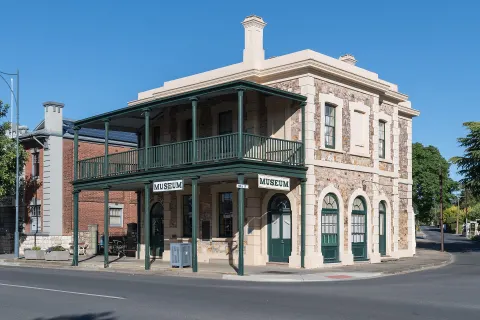
View →The A&H Doddridge blacksmith shop of 1873, worked by three generations of one family for 130 years and saved as a living museum by the community.
Angaston Main Street
View →A handsome heritage high street of cafés and galleries
Angaston Railway Station Free
View →A restored heritage railway station at Angaston, a window into the Barossa's 19th-century rail era.
Barossa Chateau
View →A grand 19th-century mansion of art, antiques and rose gardens
A chateau-style estate at Lyndoch with rose gardens, a cafe serving high tea, a cellar door and gift shop.
Barossa Goldfields
View →The site of an 1868 gold rush near Cockatoo Valley, now a network of signposted loop walks past diggings, shafts and miners' cottage ruins.
Barossa Valley Way
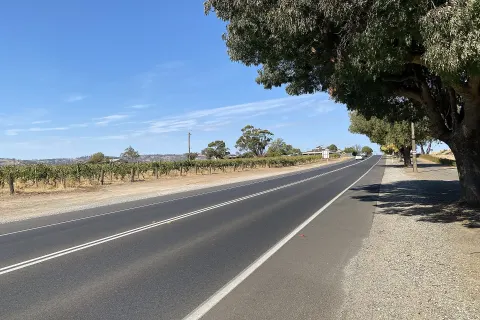
View →The valley’s spine: a vine-lined drive through every famous name
Bethany Reserve
View →A peaceful reserve in the historic village of Bethany, the Barossa's first German settlement, with a creek, lawns and old cottages nearby.
Bethany Wines $$
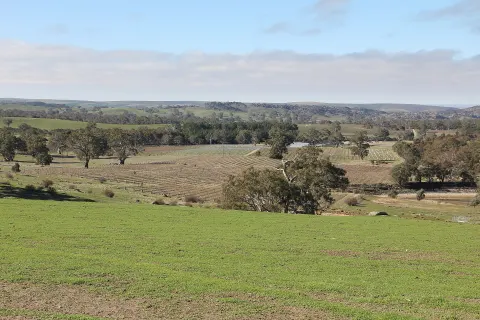
View →A historic cellar door built into an old quarry in the ranges above Bethany, with one of the prettiest valley views in the Barossa.
Burge Family Winemakers
View →Old-vine Draycott Shiraz from a small Lyndoch estate
Chateau Tanunda
View →A grand 1890s bluestone chateau, one of the Barossa's most imposing wineries, with sweeping lawns and tastings.
Chateau Yaldara $$
View →A grand riverside winery estate at Lyndoch combining a heritage mansion, sweeping gardens and a contemporary cellar door.
Eden Valley Township
View →A windswept high-country village above the Barossa floor
Gibson Wines
View →Concentrated old-vine reds at the quiet Light Pass end
Gnadenfrei Lutheran Church
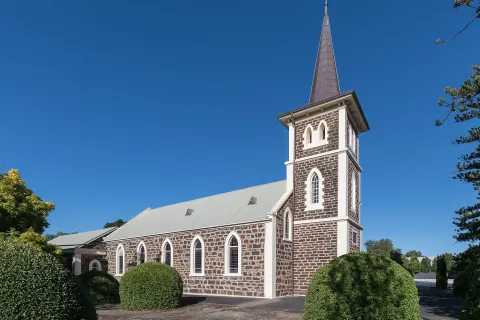
View →The 1873 church of St Michael on its vine-ringed rise at Marananga - one of the most photographed churches in the Barossa.
Goat Square, Tanunda
View →A historic colonial square in Tanunda, the original village market place, ringed by some of the town's oldest cottages.
Greenock Aviation Museum
View →A volunteer-run hangar of vintage aircraft and aviation history
Greenock Creek Wines $$$$
View →A cult Greenock producer of deep, concentrated old-vine shiraz, with a small cellar door in a heritage stone cottage.
Herberge Christi Lutheran Church
View →The 1883 church at the heart of Bethany, the Barossa's first German village, with a bell brought from Germany that once called workers home at dusk.
Herbig Family Tree
View →A giant hollow red gum near Springton that sheltered the pioneering Herbig family in the 1850s, now a heritage landmark.
Hill of Grace Vineyard
View →The hallowed old-vine vineyard beside a lonely stone church
Immanuel Lutheran Church, Light Pass
View →The elder of Light Pass's twin Lutheran churches, an 1886 building serving a congregation that dates from the 1840s.
Kapunda
View →Australia’s historic copper town on the Barossa’s edge
Kapunda Mine Historic Site
View →The open cuts, chimney and ruins of Australia's first successful metal mine, worked for copper from 1844 to 1879, with an interpretive trail.
Kapunda Museum
View →Two packed floors of copper-town history in a grand 1866 Romanesque former Baptist church, run by volunteers since 1971.
About heritage & history in Barossa Valley
Few Australian regions wear their history as openly as the Barossa. Settled from the 1840s by German Lutheran immigrants fleeing religious persecution, alongside English pastoralists, the valley grew a distinctive culture of bluestone churches, stone cottages, smallgoods and old-vine vineyards that survives to this day.
That heritage is everywhere. The spires of Lutheran churches like Langmeil rise over Tanunda, while Angaston's stone streets and the Angas family's Collingrove, now closed for restoration by the National Trust, tell the story of the colony's founding families. The hollow Herbig Family Tree at Springton, which sheltered pioneers in the 1850s, is one of the valley's most evocative landmarks.
Many of the cellar doors are themselves working pieces of history, with cellars and vineyards dating back six generations. Follow the heritage trail through the old villages of Bethany and Greenock and you'll find the Barossa's past is very much alive.
Heritage & History in Barossa Valley - frequently asked questions
What is the Barossa Valley known for in terms of heritage and history?
The Barossa is best known for its German Lutheran settler heritage, which began in the 1840s when immigrants fleeing religious persecution in Prussia founded villages like Bethany - the valley's first German settlement, established in 1842. That legacy survives in bluestone and stone-cottage architecture, historic Lutheran churches such as Langmeil at Tanunda, and traditions of smallgoods, baking and old-vine viticulture that still define the region today.
Where are the best heritage sites to visit in the Barossa Valley?
Tanunda is the heart of the Barossa's German history, home to Goat Square (the original 1842 Ziegenmarkt market place ringed by 1840s stone cottages) and several historic Lutheran churches. Other key sites include the village of Bethany, the grand Seppeltsfield estate with its Canary Island date-palm avenue, the 1890 bluestone Château Tanunda, and the heritage streetscapes of Angaston with its old blacksmith shop, museum and railway station.
Do I need to book or pay to explore the Barossa's heritage sites?
Many of the best heritage experiences are free and self-guided - you can wander Goat Square in Tanunda, stroll the Bethany and Angaston heritage walks, or follow the town-walk trails at your own pace any day of the week. Note that some sites such as historic cottages around Goat Square are now private accommodation or residences, so admire them from the street, while estates like Seppeltsfield offer paid tastings and guided tours that are best booked ahead.
When is the best time to visit the Barossa for its heritage and history?
Heritage sites and churches can be enjoyed year-round, but the standout time is the Barossa Vintage Festival, held over five days each April in odd-numbered years to celebrate the end of harvest. Running since 1947, it is Australia's longest-running wine festival and leans heavily into the valley's German roots, with the next edition scheduled for 2027. Autumn more broadly is a lovely time to visit as the old-vine vineyards turn colour.
Why does the Barossa have so much German heritage?
From the early 1840s, Lutheran families emigrated from Prussia (in regions now part of Poland and Germany) to escape religious persecution, settling the Barossa alongside English pastoralists and naming villages such as Bethanien (Bethany) and Langmeil. They held tightly to their language, faith and customs, building bluestone churches and stone cottages and bringing skills in winemaking, smallgoods and baking - a distinctive Lutheran culture that the valley still wears openly today.