Wine & Cellar Doors
Taste the Barossa at the source
The best wine & cellar doors in Barossa Valley
Historic estates and boutique makers pouring the Shiraz, Grenache and Riesling that made the Barossa famous.
Read our guide to wine & cellar doors ↓Browse wine & cellar doors by area
Map shows the 24 places on this page.
1837 Barossa $$
View →A cellar door on Yaldara Drive at Lyndoch, pouring 1837 Barossa wines with deli foods and pizza.
Artisans of Barossa
View →A shared cellar door in Tanunda pouring small-batch wines from a collective of independent Barossa winemakers.
Bethany Wines $$
View →A historic cellar door built into an old quarry in the ranges above Bethany, with one of the prettiest valley views in the Barossa.
Burge Family Winemakers
View →Old-vine Draycott Shiraz from a small Lyndoch estate
Charles Melton Wines
View →A boutique cellar door known for its Nine Popes Grenache blend and a relaxed, rustic tasting setting.
Chateau Tanunda
View →A grand 1890s bluestone chateau, one of the Barossa's most imposing wineries, with sweeping lawns and tastings.
Chateau Yaldara $$
View →A grand riverside winery estate at Lyndoch combining a heritage mansion, sweeping gardens and a contemporary cellar door.
Eden Hall Wines $$
View →A small Eden Valley estate making tight, age-worthy cabernet and riesling from high, cool vineyards.
Flaxman Wines $$
View →A tiny Eden Valley winery at Flaxman Valley, crafting small-batch Shiraz, Riesling and Grenache from old hillside vineyards.
Gibson Wines
View →Concentrated old-vine reds at the quiet Light Pass end
Glen Eldon Wines $$
View →A family winery straddling the Barossa and Eden Valleys, known for old-vine Shiraz and elegant Eden Valley Riesling.
Gomersal Wines $$
View →A relaxed, garden-fringed cellar door on the quiet Gomersal Road, pouring honest Barossa reds well away from the tour-bus circuit.
Greenock Creek Wines $$$$
View →A cult Greenock producer of deep, concentrated old-vine shiraz, with a small cellar door in a heritage stone cottage.
Henschke
View →A sixth-generation family winery near Keyneton, custodian of the legendary single-vineyard Hill of Grace Shiraz.
Hentley Farm
View →An acclaimed Seppeltsfield estate with a cellar door in an 1840s heritage cottage (bookings essential) and an award-winning restaurant.
Hentley Farm Restaurant $$$$
View →Hentley Farm's restaurant at Seppeltsfield, serving Discovery tasting menus and named SA Restaurant of the Year in 2025 and 2026.
Hill of Grace Vineyard
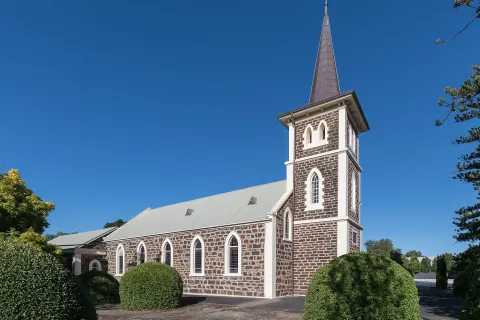
View →The hallowed old-vine vineyard beside a lonely stone church
Jacob's Creek Visitor Centre
View →A lakeside cellar door and restaurant beside the original Jacob's Creek, with vineyard views and food-and-wine pairings.
Kaesler Wines
View →A Nuriootpa estate built around old-vine Shiraz, with a cellar door serving platters and cottage accommodation on site.
Keyneton
View →The hamlet once called North Rhine, settled from 1842, home to Henschke's historic winery and a heritage trail through its 19th-century buildings.
Kies Family Wines
View →Five generations of Barossa winemaking on the Lyndoch flats
Lambert Estate Wines $$
View →A hilltop cellar door above Angaston pouring small-batch wines with sweeping valley views and a relaxed, family-run welcome.
Langmeil Winery
View →Home to the Freedom 1843 vineyard, believed to be one of the oldest surviving Shiraz plantings in the world.
Lou Miranda Estate
View →A family winery at Rowland Flat with old vines and an on-site Mediterranean restaurant, Lou's by Horizon.
About wine & cellar doors in Barossa Valley
The Barossa Valley is one of the world's great wine regions, and its cellar doors are the best way to taste it at the source. This is the home of full-bodied Shiraz, Grenache and fortified wines, poured by the families and winemakers who grow the grapes. Many vineyards here are over a century old, and a few of the Shiraz plantings are among the oldest surviving vines on earth.
The heart of the action runs along the valley floor between Tanunda and Nuriootpa, where grand estates like Chateau Tanunda and Seppeltsfield sit beside small, fiercely independent makers. Out east in the cooler hills, the Eden Valley is celebrated for elegant Riesling and the legendary single-vineyard reds of Henschke.
Many cellar doors open daily for tastings, smaller makers keep shorter weeks, and many pair beautifully with the region's eat & drink scene. Whether you want a relaxed flight on a vineyard terrace or a structured masterclass, the Barossa rewards both first-timers and seasoned collectors.
Wine & Cellar Doors in Barossa Valley - frequently asked questions
What wines is the Barossa Valley known for?
The Barossa is best known for its bold, full-bodied Shiraz, which is the region's signature grape and one of Australia's most famous wine styles. You will also find excellent Grenache and Mataro (Mourvedre), classic Eden Valley Riesling from the cooler high ground, and a long tradition of fortified wines such as tawny. Many cellar doors pour all of these, so it is easy to taste the region's full range in a single day.
How many cellar doors are there in the Barossa, and where do I start?
The Barossa wine region is home to more than 220 wineries and more than 80 cellar doors, ranging from historic family estates to small boutique makers, with most clustered around the towns of Tanunda, Nuriootpa, Angaston and Lyndoch. Established names you can visit include Seppeltsfield, Langmeil, Bethany Wines and Henschke (bookings essential), while smaller producers such as Teusner and Sons of Eden open by appointment. With so many close together, it is best to pick three or four for a relaxed day rather than trying to see them all.
Do I need to book a tasting at Barossa cellar doors?
Policies vary by winery, so it pays to check ahead. Many cellar doors welcome walk-ins for standard tastings, but seated tastings, premium experiences and larger groups usually need a booking, and some smaller or appointment-only producers require you to arrange a visit in advance. Many larger cellar doors open daily from around 10am to 5pm, but smaller makers often close one or two days a week, so check hours before you go.
When is the best time of year to visit the Barossa for wine?
Autumn, roughly March to May, is widely considered the best time to visit, with mild sunny days, cool nights and the vines turning golden. This coincides with vintage, when the grape harvest is in full swing and you may see harvesters working the vineyards, sometimes at night. Autumn also brings the biennial Barossa Vintage Festival, a five-day celebration of parades, food, music and wine, next held from 21 to 25 April 2027.
What makes Barossa cellar doors different from other wine regions?
The Barossa is defined by its remarkable old vines, with some Shiraz and Grenache plantings dating back to the 1840s and 1860s, predating the phylloxera disease that wiped out many of Europe's vineyards. This deep heritage means you are often tasting wines made by the same families who have grown the grapes for generations. The region is also a stronghold for fortified wine, and at Seppeltsfield you can taste a 100-Year-Old Para Tawny or a tawny from your own birth year straight from the barrel.