
By The Discover the Barossa Team · · 6 min read
No Barossa estate carries its history like Seppeltsfield. From Joseph Seppelt's arrival in 1850 to the century-old tawny released every year, this is the dynasty's story.
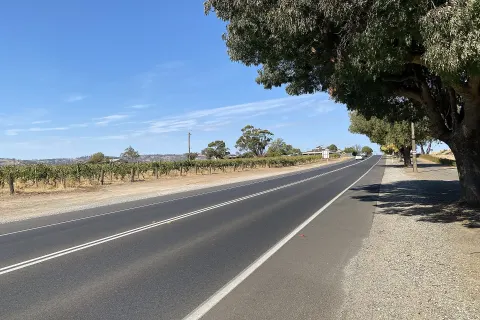
Every wine region has a grand estate. Few have one quite like Seppeltsfield, where the road itself - a double line of palms running dead straight through the vines - announces that something out of the ordinary is coming.
A merchant bets the family
Joseph Ernst Seppelt was a merchant from Silesia who sailed from Hamburg in September 1849 and stepped ashore at Port Adelaide in January 1850, one family among the thousands of German-speaking migrants remaking South Australia. In 1851 he and his wife Johanna bought land in the valley's west and called it Seppeltsfield - barely fifteen years after the colony itself was founded.
Tobacco was the first plan. Wine was the better one. Under Joseph and then his son Benno, the estate grew into one of the largest wine producers in the southern hemisphere, its bluestone buildings rising through the second half of the nineteenth century. Benno's gravity cellar of 1888 was engineering as showmanship: fruit entered at the top of the hill and gravity did the work the whole way down.
The barrel nobody living would drink
Benno's most extravagant idea was an act of pure patience. In 1878 he set aside a puncheon of his finest fortified wine with instructions that it not be touched for a century. A barrel has been laid down every year since, and in 1978 the first 100-year-old Para Tawny was released. Seppeltsfield remains the only winery in the world releasing a 100-year-old wine every single year - you can taste the year of your birth in its Centennial Cellar, surrounded by a century and a half of sleeping barrels.
Palms and a temple on the hill
The estate's two strangest monuments arrived in the 1920s. After Sophie Seppelt's death, the family won permission in 1925 to build a mausoleum on the property's highest point, and the Doric-columned Seppelt Family Mausoleum was completed in 1927 - a Grecian temple above the vines, now holding more than thirty members of the dynasty. From 1929, through the Depression years, more than 2,000 palms were planted along the estate's roads, an avenue the family called "the Avenue of Hopes and Dreams".
The estate today
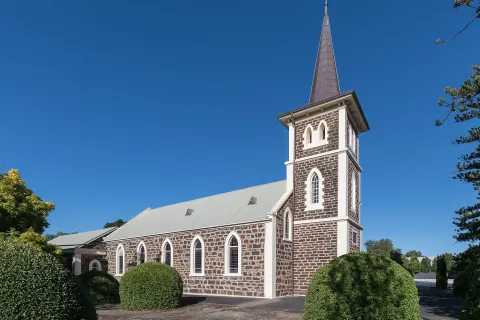
Seppeltsfield has outlived the empire that built it and become the western Barossa's gravitational centre. You can lunch at FINO, one of regional Australia's most celebrated restaurants, watch artisans at work in the JamFactory studios, and finish with gin instead of port at Seppeltsfield Road Distillers up the road. The surrounding district rewards lingering too - Hentley Farm and the Marananga church rise are minutes away.
It is tempting to treat Seppeltsfield as a museum. Resist. The barrels are still filling, the palms are still growing, and the 1878 bet is still being honoured every vintage - which makes it less a relic than the longest game of patience in Australian wine. For why those old vines matter so much, read why the Barossa has the world's oldest vines.